

|
|
|
| – |
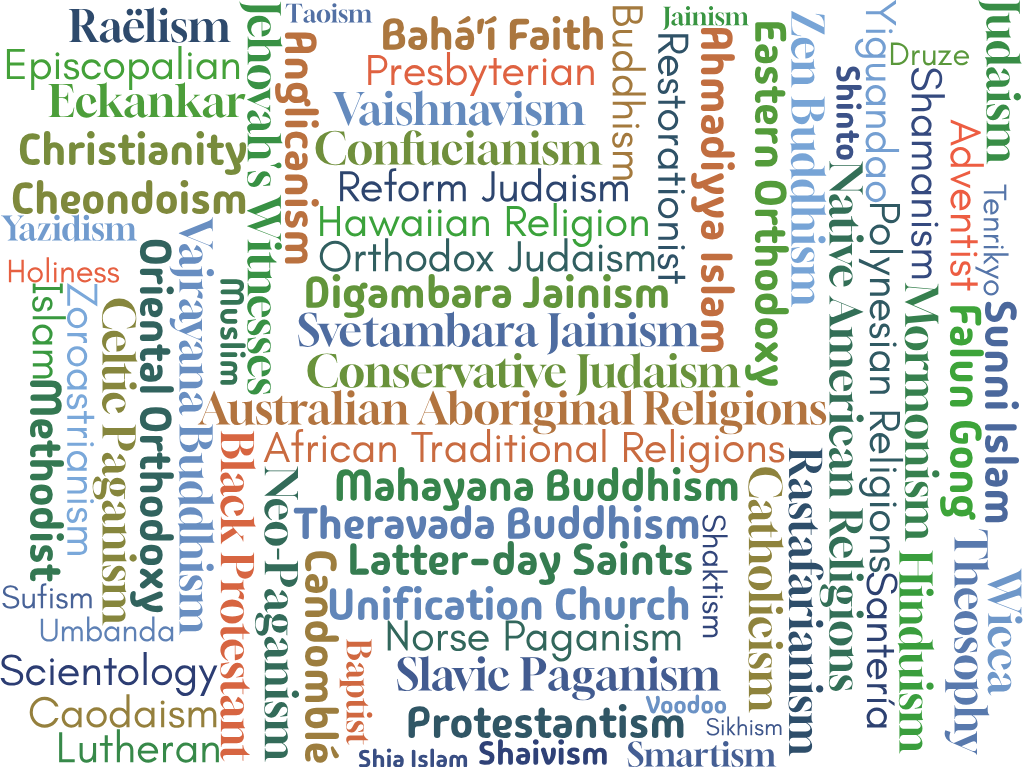
Religious adherence refers to the extent to which individuals or communities follow and practice the beliefs, rituals, and moral guidelines of a particular religion. It encompasses a wide range of behaviors, from personal devotion and private prayer to participation in communal worship and adherence to religious laws. The nature and intensity of religious adherence vary significantly across cultures, historical periods, and individual believers, influenced by factors such as upbringing, societal norms, personal experiences, and theological interpretations. At its core, religious adherence is often rooted in faith, which is the belief in the doctrines, teachings, and spiritual truths of a religion. This faith is typically nurtured through religious education, family traditions, and community involvement. For many, adherence to a religion provides a sense of identity, purpose, and belonging. It offers a framework for understanding the world, addressing existential questions, and navigating life's challenges. Religions often provide moral and ethical guidelines that shape adherents' behavior, influencing decisions in areas such as family life, work, and social interactions. Religious adherence can manifest in various forms, ranging from nominal or cultural adherence to devout or fundamentalist practices. Nominal adherence refers to individuals who identify with a religion primarily due to cultural or social reasons rather than deep personal conviction. They may participate in major religious festivals or rites of passage (e.g., weddings, funerals) but may not engage in regular worship or follow religious teachings closely. On the other end of the spectrum, devout adherents are deeply committed to their faith, often prioritizing religious practices and principles in their daily lives. Fundamentalist adherents take this commitment further, advocating for a strict, literal interpretation of religious texts and resisting modernization or secular influences. Communal worship and rituals play a central role in religious adherence for many believers. These practices foster a sense of community and shared identity, reinforcing religious values and traditions. For example, in Christianity, regular attendance at church services, participation in sacraments like baptism and communion, and observance of holidays such as Christmas and Easter are key expressions of adherence. Similarly, in Islam, daily prayers, fasting during Ramadan, and the Hajj pilgrimage to Mecca are fundamental practices for devout Muslims. In Hinduism, adherence may involve daily puja (worship), participation in festivals like Diwali, and adherence to dharma (moral duty). Religious adherence also extends to ethical and moral conduct. Many religions prescribe specific codes of behavior, such as the Ten Commandments in Judaism and Christianity, the Five Precepts in Buddhism, or the Yamas and Niyamas in Hinduism. Adherents strive to align their actions with these teachings, often viewing their faith as a guide for living a virtuous life. For some, this includes acts of charity, social justice, and community service, reflecting the belief that religious adherence is not just about personal salvation but also about contributing to the well-being of others. However, religious adherence is not without challenges. In an increasingly globalized and secular world, many individuals face tensions between traditional religious practices and modern values. Issues such as gender equality, LGBTQ+ rights, and scientific advancements often prompt debates within religious communities about the relevance and interpretation of ancient teachings. Some adherents reconcile these tensions by adopting a more progressive or inclusive approach to their faith, while others cling to traditional interpretations.
In conclusion, religious adherence is a multifaceted phenomenon that encompasses belief, practice, and ethical living. It provides individuals with a sense of meaning, community, and moral direction, while also reflecting the dynamic interplay between tradition and modernity. Whether expressed through private devotion or public ritual, religious adherence remains a powerful force in shaping individual identities and societal values.
Most common religion not including "Unknown" is:
|
||||||||||||||
| Evangelical |
Mainline |
||||||||||||||
| Description | Total Population | Catholic | Orthodox | Baptist | Other Protestant | Pentecostal | Restorationist | Methodist | Other Protestant | Episcopalian | Black Protestant | Mormon | Jewish | Muslim | Unknown |
| Haskell County | 4,956 | 673 | 0 | 2,702 | 104 | 138 | 233 | 751 | 157 | 0 | 0 | 0 | 0 | 0 | 198 |
| Texas (in 000's) | 31,182 | 5,670 | 50 | 4,315 | 420 | 587 | 409 | 2,609 | 515 | 346 | 185 | 346 | 109 | 479 | 15,140 |
| National (in 000's) | 335,151 | 65,860 | 1,812 | 23,527 | 8,735 | 7,128 | 3,214 | 23,911 | 14,140 | 3,749 | 2,643 | 7,052 | 4,914 | 3,361 | 165,105 |
| Jones County | 15,739 | 358 | 0 | 5,217 | 129 | 499 | 1,406 | 2,029 | 584 | 0 | 0 | 0 | 0 | 0 | 5,517 |
| Shackelford County | 3,089 | 169 | 0 | 1,632 | 90 | 115 | 198 | 282 | 558 | 34 | 0 | 0 | 0 | 0 | 11 |
| Knox County | 3,197 | 789 | 0 | 1,134 | 0 | 211 | 131 | 902 | 0 | 0 | 0 | 0 | 0 | 0 | 30 |
| Baylor County | 3,496 | 329 | 0 | 1,924 | 11 | 42 | 105 | 566 | 111 | 0 | 0 | 54 | 0 | 0 | 354 |
| Throckmorton County | 1,516 | 0 | 0 | 723 | 0 | 26 | 100 | 471 | 75 | 0 | 0 | 0 | 0 | 0 | 121 |
| Stonewall County | 1,196 | 139 | 0 | 607 | 0 | 0 | 40 | 403 | 0 | 0 | 0 | 0 | 0 | 0 | 7 |
| King County | 235 | 0 | 0 | 128 | 0 | 0 | 0 | 0 | 0 | 0 | 0 | 0 | 0 | 0 | 107 |
| Per Cent to Total Population | Diversity Index | ||||||||||||||
| Haskell County | 34.47 | 13.58 | 0.00 | 54.52 | 2.10 | 2.78 | 4.70 | 15.15 | 3.17 | 0.00 | 0.00 | 0.00 | 0.00 | 0.00 | 4.00 |
| Texas | 29.65 | 18.18 | 0.16 | 13.84 | 1.35 | 1.88 | 1.31 | 8.37 | 1.65 | 1.11 | 0.59 | 1.11 | 0.35 | 1.54 | 48.55 |
| National | 29.53 | 19.65 | 0.54 | 7.02 | 2.61 | 2.13 | 0.96 | 7.13 | 4.22 | 1.12 | 0.79 | 2.10 | 1.47 | 1.00 | 49.26 |
| Jones County | 26.03 | 2.27 | 0.00 | 33.15 | 0.82 | 3.17 | 8.93 | 12.89 | 3.71 | 0.00 | 0.00 | 0.00 | 0.00 | 0.00 | 35.05 |
| Shackelford County | 32.96 | 5.47 | 0.00 | 52.83 | 2.91 | 3.72 | 6.41 | 9.13 | 18.06 | 1.10 | 0.00 | 0.00 | 0.00 | 0.00 | 0.36 |
| Knox County | 27.25 | 24.68 | 0.00 | 35.47 | 0.00 | 6.60 | 4.10 | 28.21 | 0.00 | 0.00 | 0.00 | 0.00 | 0.00 | 0.00 | 0.94 |
| Baylor County | 35.05 | 9.41 | 0.00 | 55.03 | 0.31 | 1.20 | 3.00 | 16.19 | 3.18 | 0.00 | 0.00 | 1.54 | 0.00 | 0.00 | 10.13 |
| Throckmorton County | 33.74 | 0.00 | 0.00 | 47.69 | 0.00 | 1.72 | 6.60 | 31.07 | 4.95 | 0.00 | 0.00 | 0.00 | 0.00 | 0.00 | 7.98 |
| Stonewall County | 38.58 | 11.62 | 0.00 | 50.75 | 0.00 | 0.00 | 3.34 | 33.70 | 0.00 | 0.00 | 0.00 | 0.00 | 0.00 | 0.00 | 0.59 |
| King County | 50.40 | 0.00 | 0.00 | 54.47 | 0.00 | 0.00 | 0.00 | 0.00 | 0.00 | 0.00 | 0.00 | 0.00 | 0.00 | 0.00 | 45.53 |
| Comparisons to State Norms | % to Total >= 150% | % to Total < 50% | |||||||||||||
| Haskell County | 74.68 | 0.00 | 394.00 | 155.89 | 147.86 | 358.24 | 181.08 | 191.67 | 0.00 | 0.00 | 0.00 | 0.00 | 0.00 | 8.23 | |
| Texas | 100.00 | 100.00 | 100.00 | 100.00 | 100.00 | 100.00 | 100.00 | 100.00 | 100.00 | 100.00 | 100.00 | 100.00 | 100.00 | 100.00 | |
| National | 108.07 | 335.54 | 50.73 | 193.63 | 112.94 | 73.07 | 85.25 | 255.26 | 100.68 | 132.92 | 189.88 | 417.70 | 65.23 | 101.46 | |
| Jones County | 12.51 | 0.00 | 239.54 | 60.89 | 168.35 | 680.70 | 154.05 | 224.50 | 0.00 | 0.00 | 0.00 | 0.00 | 0.00 | 72.19 | |
| Shackelford County | 30.09 | 0.00 | 381.80 | 216.45 | 197.68 | 488.42 | 109.09 | 1,092.96 | 99.06 | 0.00 | 0.00 | 0.00 | 0.00 | 0.73 | |
| Knox County | 135.73 | 0.00 | 256.34 | 0.00 | 350.46 | 312.23 | 337.15 | 0.00 | 0.00 | 0.00 | 0.00 | 0.00 | 0.00 | 1.93 | |
| Baylor County | 51.76 | 0.00 | 397.71 | 23.37 | 63.79 | 228.86 | 193.46 | 192.10 | 0.00 | 0.00 | 139.39 | 0.00 | 0.00 | 20.85 | |
| Throckmorton County | 0.00 | 0.00 | 344.65 | 0.00 | 91.07 | 502.63 | 371.26 | 299.33 | 0.00 | 0.00 | 0.00 | 0.00 | 0.00 | 16.44 | |
| Stonewall County | 63.92 | 0.00 | 366.77 | 0.00 | 0.00 | 254.85 | 402.65 | 0.00 | 0.00 | 0.00 | 0.00 | 0.00 | 0.00 | 1.21 | |
| King County | 0.00 | 0.00 | 393.62 | 0.00 | 0.00 | 0.00 | 0.00 | 0.00 | 0.00 | 0.00 | 0.00 | 0.00 | 0.00 | 93.78 | |
| Comparisons to National Norms | % to Total >= 150% | % to Total < 50% | |||||||||||||
| Haskell County | 69.10 | 0.00 | 776.64 | 80.51 | 130.92 | 490.24 | 212.40 | 75.09 | 0.00 | 0.00 | 0.00 | 0.00 | 0.00 | 8.11 | |
| Texas | 92.53 | 29.80 | 197.12 | 51.65 | 88.54 | 136.85 | 117.30 | 39.18 | 99.33 | 75.23 | 52.67 | 23.94 | 153.30 | 98.56 | |
| National | 100.00 | 100.00 | 100.00 | 100.00 | 100.00 | 100.00 | 100.00 | 100.00 | 100.00 | 100.00 | 100.00 | 100.00 | 100.00 | 100.00 | |
| Jones County | 11.58 | 0.00 | 472.18 | 31.45 | 149.06 | 931.53 | 180.70 | 87.95 | 0.00 | 0.00 | 0.00 | 0.00 | 0.00 | 71.16 | |
| Shackelford County | 27.84 | 0.00 | 752.60 | 111.79 | 175.04 | 668.40 | 127.96 | 428.17 | 98.40 | 0.00 | 0.00 | 0.00 | 0.00 | 0.72 | |
| Knox County | 125.59 | 0.00 | 505.28 | 0.00 | 310.31 | 427.28 | 395.47 | 0.00 | 0.00 | 0.00 | 0.00 | 0.00 | 0.00 | 1.90 | |
| Baylor County | 47.89 | 0.00 | 783.97 | 12.07 | 56.48 | 313.19 | 226.93 | 75.26 | 0.00 | 0.00 | 73.41 | 0.00 | 0.00 | 20.55 | |
| Throckmorton County | 0.00 | 0.00 | 679.37 | 0.00 | 80.64 | 687.84 | 435.48 | 117.26 | 0.00 | 0.00 | 0.00 | 0.00 | 0.00 | 16.20 | |
| Stonewall County | 59.14 | 0.00 | 722.97 | 0.00 | 0.00 | 348.75 | 472.31 | 0.00 | 0.00 | 0.00 | 0.00 | 0.00 | 0.00 | 1.19 | |
| King County | 0.00 | 0.00 | 775.90 | 0.00 | 0.00 | 0.00 | 0.00 | 0.00 | 0.00 | 0.00 | 0.00 | 0.00 | 0.00 | 92.43 | |
Sources: STI: PopStats, Circa April 2025